
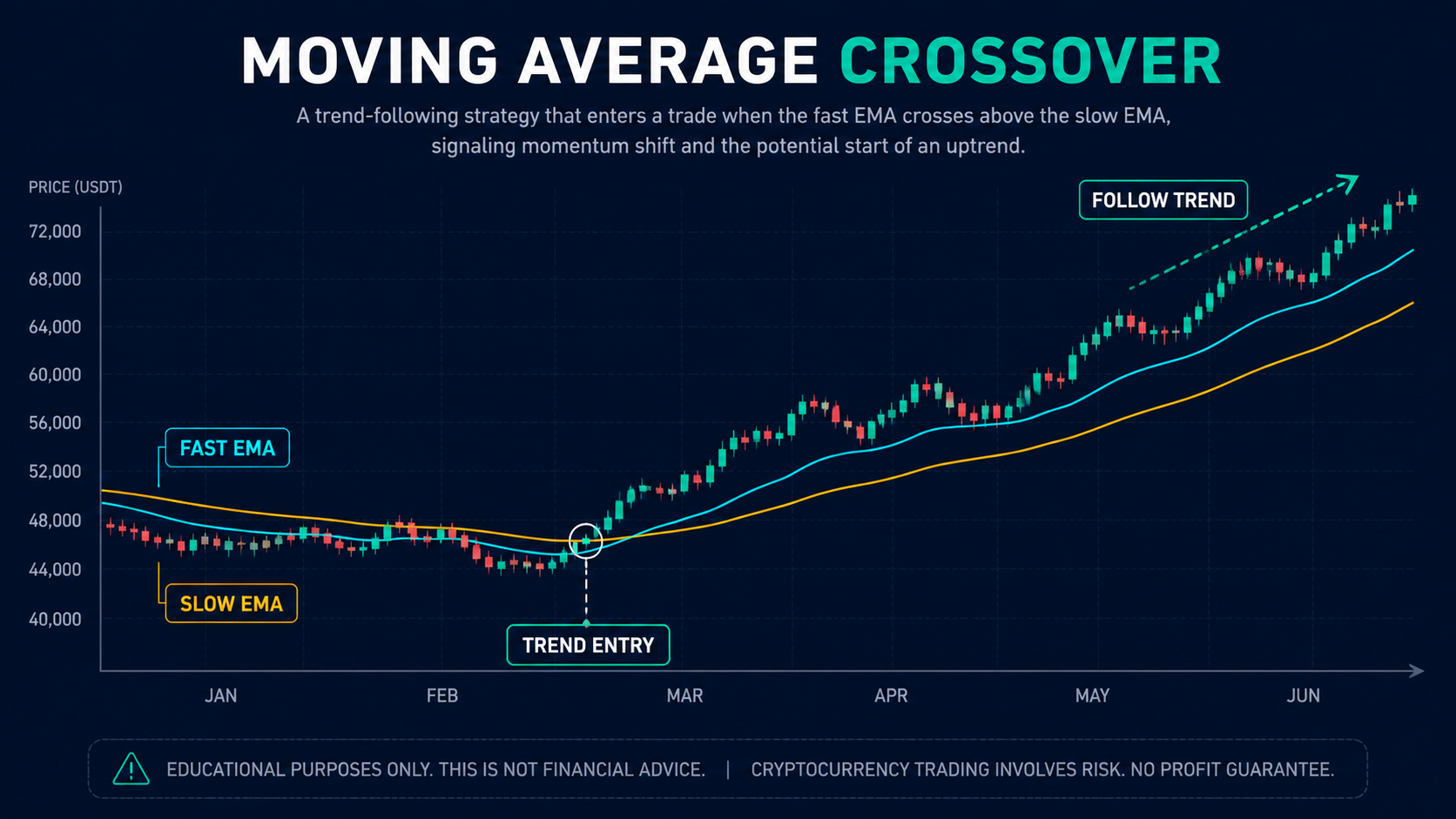
Moving-average crossover trading follows an established direction rather than trying to call the exact bottom or top. Common pairs include EMA 20/50 and EMA 50/100; Williams Alligator can express a similar shift in trend structure.
Signal logic
A bullish crossover occurs when the faster average moves above the slower one; bearish logic is the reverse. The signal is lagging by design, which can help filter noise but may enter after part of the move has already happened. Confirm trend conditions with slope, price location relative to both averages and, where relevant, a higher timeframe.
Bot setup
Choose one timeframe for the signal and one higher timeframe for context. Define whether the bot enters on the candle close, on a retest, or only after a minimum distance between averages. Place Stop Loss where the trend premise fails and use a trailing exit or fixed target that matches the timeframe.
Risks and validation
Ranges produce repeated false crosses, especially with short averages. Avoid treating every cross as a trade; measure results separately in trending and sideways periods. A crossover also does not define position size, so use a fixed account risk and include slippage around fast confirmation candles.
FAQ
Which EMA pair should be used? There is no universally correct pair; select lengths by tested timeframe, asset and holding horizon.